
Kurt Schwitters in his labyrinth
Gonzalo Cordova
Daniel Quaranta
“Merz means creating relationships, preferably among all the things in the world.”
— Karin Orchard, p. 2008.
The aim of this text is to observe the URSONATE, by Kurt Schwitters, within what was the MERZ project, which constituted the framework that contained both the artistic work and the lifelong project of its author. This work emerges from intersecting influences — music, the modes of production of the avant-gardes, prevailing aesthetics, and the artist’s creative environment — and invites us to observe the correlations and analogies that may precipitate a materialization of the poem on a stage. On a MERZ stage. The lines of convergence that will organize this work, within this hypothetical scenic/performative framework, propose to consider the work within the canon of scenic production during the period of the so-called historical avant-gardes.
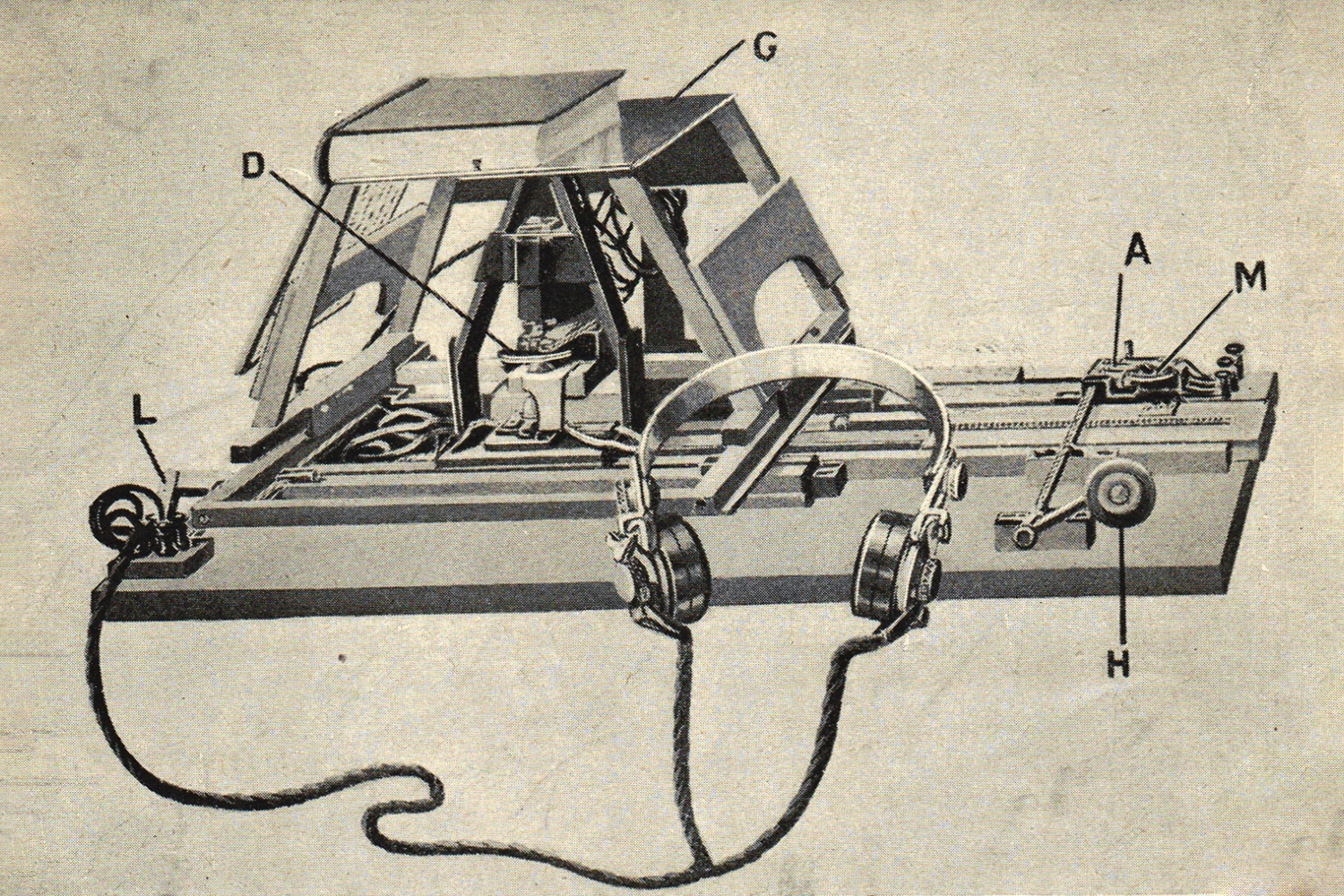
In this study we will focus on the Merz devices, on collage — as a procedure — that determined Schwitters’s artistic production, and, of course, the URSONATE, his textual and poetic project, which spans from the poetry of Ana Blume to the avant-garde poetry that concerns us here and, finally, we will present the foundations of a proposal for a work derived from the Teatrofón.
